

Let’s face it: buying a house is stressful enough without having to decipher a secret language. When you look at property listings, you’re constantly hit with terms like Carpet Area, Built-Up Area, and Super Built-Up Area. And honestly, if you don’t know the difference, it’s like buying a phone without knowing whether the price includes the charger, the case, or just the handset!
This lack of clarity is one of the most common doubts for homebuyers. Without properly understanding how these property sizes are calculated, it’s incredibly easy to misjudge the true value of a home or, even worse, pay for less usable space than you expected. You’re making a massive investment, so knowing the key definitions isn’t just helpful it’s absolutely essential for making an informed decision.
Here are the three simple, yet critical, terms explained, so you can compare properties transparently and calculate the real value of your investment.
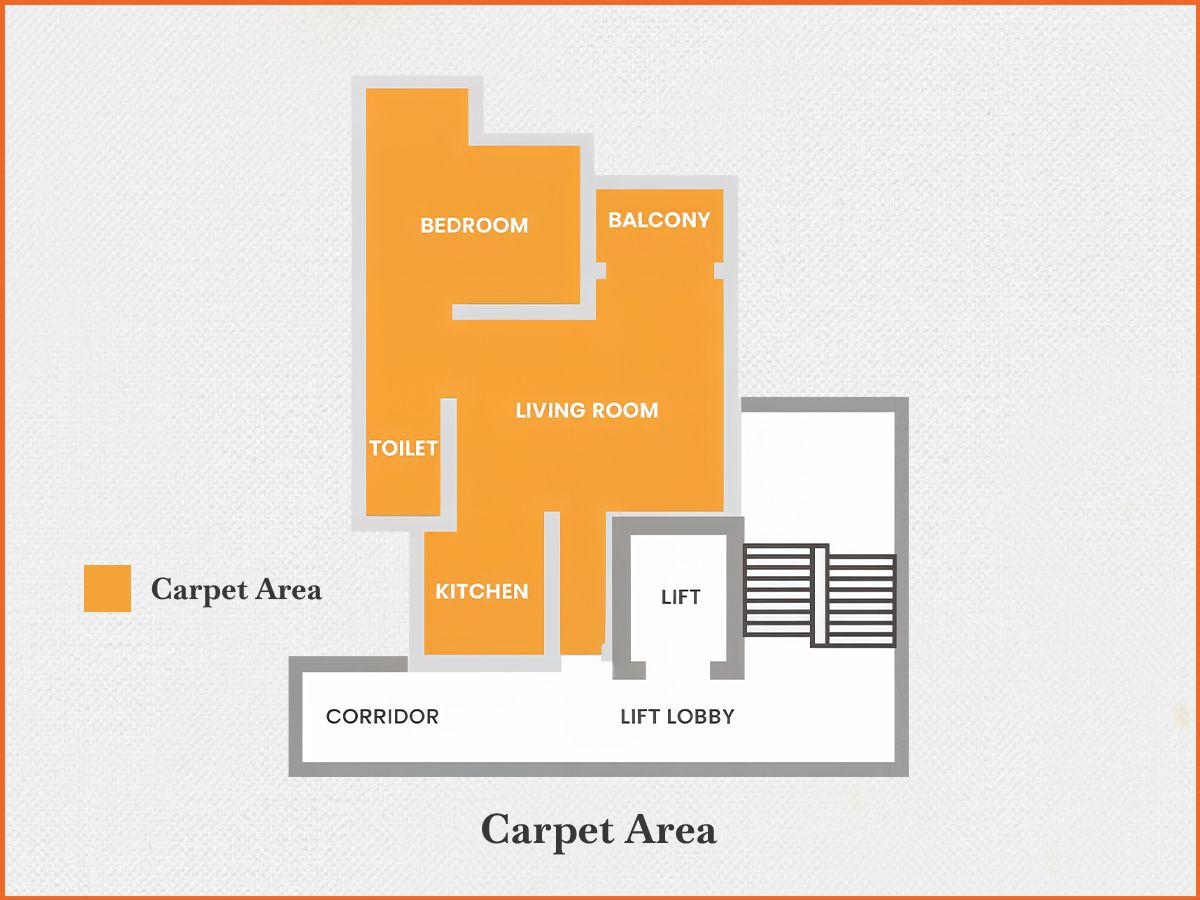
◉Carpet Area: What You Actually Live In
Here’s the simplest way to think about a Carpet Area, it is the actual usable area within the four walls of your apartment.
If you were to lay down a carpet hence the name, though you don’t actually have to, this is the space it would cover.
What it includes:
- The area of the bedrooms, living room, kitchen, and bathrooms.
- The internal partition walls within the apartment are excluded by the RERA definition, which focuses purely on the net usable area.
Why it matters:
Under the RERA (Real Estate Regulatory Authority) Act, developers are legally required to quote prices based on the Carpet Area. This was a monumental change, bringing much-needed transparency to the market. When you see a property size, this is the number you should focus on to understand the actual size of your personal living space.
◉ Built-Up Area: Your Walls and Windows
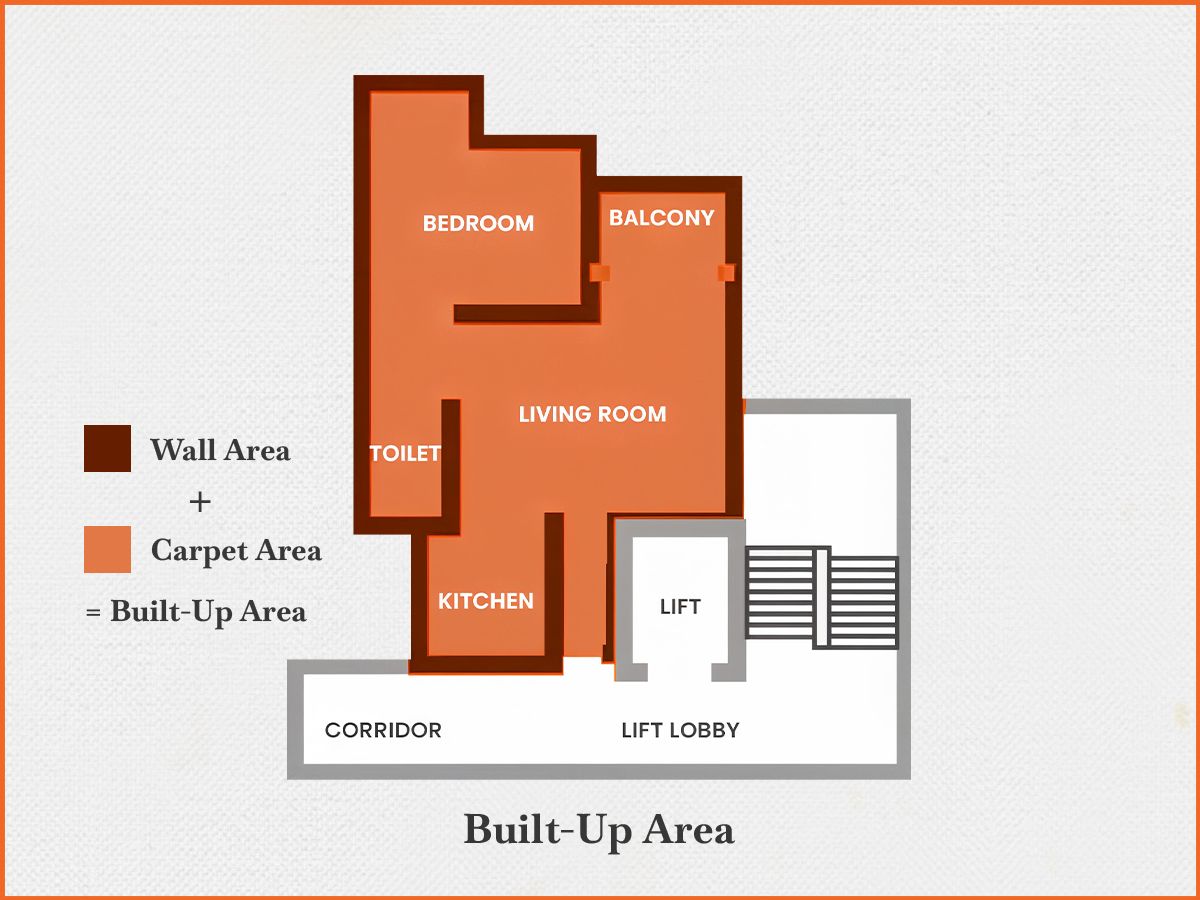
The Built-Up Area is basically the Carpet Area along with a bit more it includes the space occupied by the walls and structural elements of the home
What it includes:
- The entire Carpet Area.
- The thickness of the interior and exterior walls.
- The area of your private balcony or terrace.
- Any private-use ducts or dry-terraces attached to your unit.
Think of it as the area enclosed by the perimeter of your flat. It’s what the builder actually constructed for your unit, including the thickness of the walls. It’s a bigger number than the Carpet Area, naturally, but it still doesn’t represent the full cost you pay.
◉ Super Built-Up Area: The ‘Share-and-Share-Alike’ Space
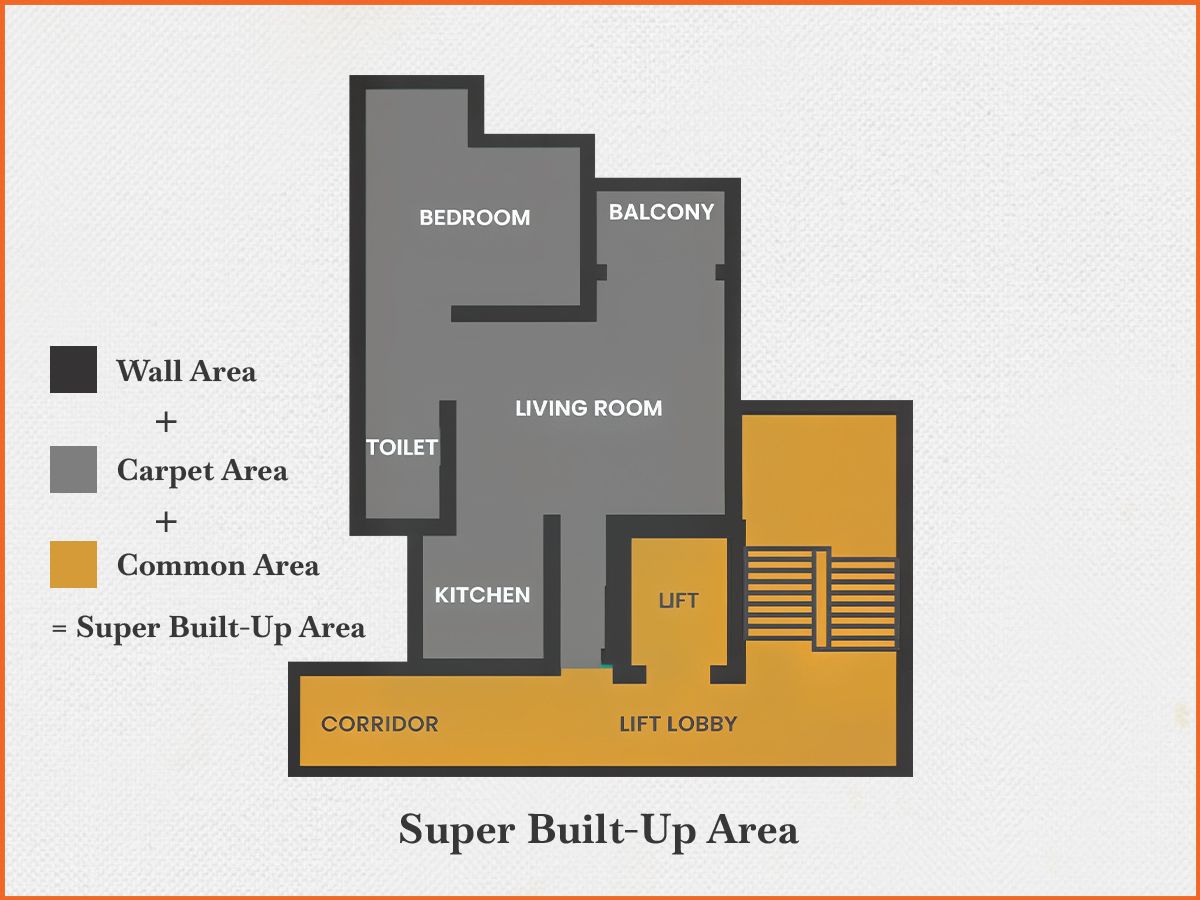
This is often the largest, and sometimes the most confusing, figure. The Super Built-Up Area includes your Built-Up Area plus a proportionate share of all the common areas in the building complex.
What it includes:
- The entire Built-Up Area of your flat.
- A share of the building’s common amenities like the lobby, entrance lounge, stairs, lifts, maintenance rooms, and corridors.
- In some premium projects, it might even include a portion of the clubhouse, swimming pool, or garden space (though RERA definitions are tightening what can be included here).
The extra space added to your Built-Up Area is called the ‘loading’ factor. If a builder applies a 25% loading, it means your Super Built-Up Area is 25% higher than your Built-Up Area. This is what you’re paying for when you buy into a project with fantastic common facilities.
How Knowing the Difference Empowers You
Understanding these three terms puts the power back in your hands.
- Transparent Comparison: You can now compare properties fairly. Don’t be fooled by two flats with similar Super Built-Up Areas; look at the Carpet Area to know which one offers more usable space inside.
- Calculate Real Value: By checking the ‘loading’ (the difference between Carpet Area and Super Built-Up Area), you can gauge how much of your money is going towards common facilities. A higher loading isn’t necessarily bad if you value a massive clubhouse and gym, but a high loading on a project with minimal amenities should raise a red flag.
- RERA Compliance: Insist on the Carpet Area being explicitly mentioned in the agreement. It’s your legal right and the clearest indicator of what you are actually buying.
Being aware of these differences is the first step toward becoming a truly confident homebuyer.
Looking for homes in Thane with clear area definitions and transparent pricing? Explore projects designed with trust and planning at the core. You deserve to know exactly what you’re paying for!